
Lesson 1: Understanding the Iceberg Principle
What the heck have icebergs got to do with live chat work? The answer is...a lot more than you might think.
You may know the old adage that tells us 9/10ths of an iceberg lies below the surface. In other words, what’s immediately visible is just a tiny part of a big picture.
We all know what happened when the captain of the Titanic failed to see the whole iceberg—his ship went under and sank to the bottom.

Every organization faces the same risk when dealing with customers. What they hear people saying is just a small part of the story. Who knows what they may say when talking to friends, family, or spreading the word on social media.
Any savvy company will be aware of this issue and the potential consequences of getting things wrong. In an online world, visitors are just a click away from competitors' websites. If you fail to give them the experience they expect, the consequences can be severe.
Amazon, for example, is famous for being a customer-centric company. Its goal is to be “the most customer-obsessed company in the world.” The result? The company grew from working out of a garage to become one of the world’s biggest companies.
On the other hand, many companies have tried to get away with poor service and paid the price. They lost market share, saw their profits eroded...or even went bankrupt.
So good customer service has a compounding effect that leads to unstoppable success. But poor service causes a company to spiral down to the bottom.
Research by US firm TARP shows that for every 26 unhappy customers, only one will lodge a formal complaint. Yet an average of 1,560 people will hear about at least one of these dissatisfied customers’ experiences. Ouch!
This is how the math works. On average, each unhappy customer will tell ten people, who in turn will tell five others. Soon the bad news is spreading like wildfire, and the company starts sinking like the Titanic.
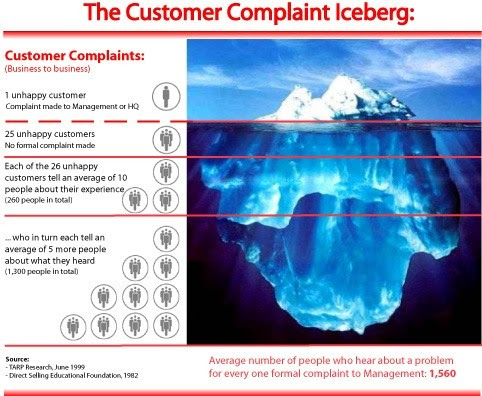
Customers very rarely complain to the product provider. Instead, they tell their friends, who in turn tell their friends, creating a pyramid of dissatisfaction. This problem is amplified in the world of social media, where bad news spreads quickly across Facebook, Instagram, and other platforms.
Whew...that’s scary! So how do you fit into this picture as a live chat agent?
As part of the customer service effort, you are a vital member of the team. Every time you interact with people over chat, you have a chance to make a good impression...or a bad one.
Making a good impression is not difficult. Just do your best to resolve the customer’s problem, be polite and keep them informed about what’s going on. You are then likely to end up with a happy customer who shares their positive experience with others.
But one slip-up can result in a negative impression. Let’s say you have to get more information from your supervisor and leave the customer on hold for five minutes. To you, that may not seem like a big deal. But to the customer, five minutes may feel like an eternity.
After a minute or so, they will start to wonder what’s happening. After three minutes, they will think you have forgotten them. At four minutes, they may end the chat...furious with the poor service they believe they received.
That may cause the customer to leave a bad review on a site like TrustPilot or post an angry message on Facebook or Twitter. Meanwhile, you have no idea what went wrong. You can’t see the iceberg below the surface that’s causing all the trouble.
So when chatting with customers, always try to put yourself in their shoes. What are they thinking right now? How can you reassure them and placate them?
If you can achieve that, you will be on your way to turning the iceberg principle to your company’s advantage.
Copyright © SocialSaleRep. All Rights Reserved.